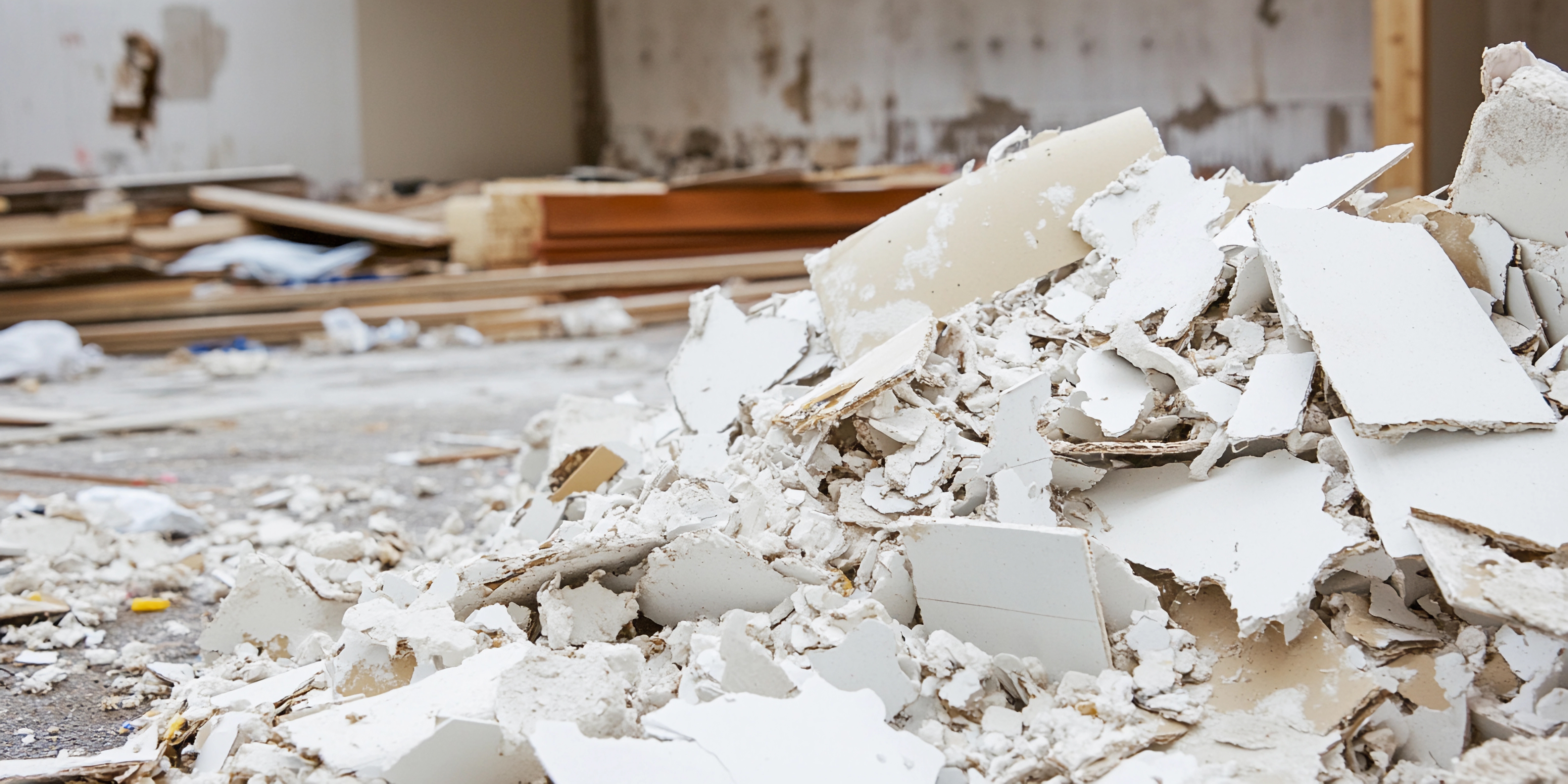

Renovating your London home is exciting — but the mountain of rubble, timber, plasterboard, old bathroom suites, and general builders' waste it leaves behind? Less so. Renovation waste is one of the most heavily regulated categories of rubbish in the UK, and London homeowners who dispose of it incorrectly face fines of up to £50,000 or even criminal prosecution.
This guide cuts through the complexity. Whether you've just knocked through a wall, ripped out a kitchen, or completed a full loft conversion, here is everything you need to know about disposing of renovation waste legally, responsibly, and as cost-effectively as possible in London.
How Do You Legally Dispose of Renovation Waste in London?
Use a licensed waste carrier, keep your Waste Transfer Note, separate hazardous materials, and choose the right route for your load size: man and van collection for fast mixed loads, building waste clearance for heavy renovation debris, and compliant hazardous disposal for restricted materials.
Best Service Match by Renovation Waste Type
- Mixed renovation clutter and bulky items: man and van rubbish removal
- Heavy rubble, plasterboard, timber, and demolition debris: building waste clearance
- Urgent post-project clear-outs: same-day rubbish removal
- Hazardous renovation materials: hazardous waste collection and disposal
- Whole-property end-of-project clear-outs: site clearance
London GEO Intent Snapshot
This guide is built for homeowners and landlords searching for legal renovation waste disposal in Camden, Islington, Westminster, Hackney, Hammersmith and Fulham, Barnet, Croydon, and other London boroughs where council collection rules, permits, and HWRC access can vary by postcode.
What Counts as Renovation Waste?
Before choosing a disposal method, it's important to understand what qualifies as renovation or construction waste under UK law.
Renovation waste typically includes:
- Rubble, bricks, concrete, and masonry
- Plasterboard and plaster
- Timber, floorboards, and skirting boards
- Old kitchen and bathroom units
- Ceramic tiles and sanitary ware
- Carpets, underlay, and flooring
- Insulation materials
- Wiring and piping
- Windows, doors, and frames
- Packaging from building materials
Some of these materials — particularly plasterboard, asbestos-containing materials, and certain insulation products — are classified differently under waste regulations and require specialist handling.
Key legal point: Under the Environmental Protection Act 1990 and the Duty of Care Regulations, anyone who produces, holds, or transfers waste has a legal responsibility to ensure it is managed correctly. This applies to homeowners as well as builders.
Is Renovation Waste Classed as Household or Commercial Waste?
This is one of the most common points of confusion for London homeowners — and getting it wrong can be costly.
The short answer: Renovation waste from a domestic property is generally classified as construction and demolition (C&D) waste, not standard household waste. This means it cannot be collected by your local council's kerbside recycling service and cannot be disposed of in your regular wheelie bin.
However, if you are carrying out the work yourself (DIY), you can take renovation waste to a Household Waste Recycling Centre (HWRC) — provided it falls within the permitted quantities and material types. If a contractor is carrying out the work, the waste is legally their responsibility and must be handled through commercial channels.
Legal Ways to Dispose of Renovation Waste in London
1. Hire a Licensed Waste Carrier
The most straightforward option for most London homeowners and landlords is to hire a licensed waste removal company. Under UK law, any business that collects and transports waste on your behalf must be registered with the Environment Agency as a licensed waste carrier.
Why this matters to you: If you hand your renovation waste to an unlicensed collector — even if they offer a cheap deal — and that waste is later fly-tipped, you could be held jointly liable and face a fine of up to £5,000 in a magistrates' court or unlimited fines in the Crown Court.
✅ Always ask for a waste carrier licence number before booking. You can verify any carrier's registration on the Environment Agency public register.
Our building waste clearance service in London is carried out by fully licensed waste carriers who provide proper waste transfer documentation — giving you complete legal peace of mind.
2. Skip Hire in London
Skip hire is a popular choice for larger renovation projects. A skip is delivered to your property, filled at your own pace, then collected and taken to a licensed waste facility.
Things to know before hiring a skip in London:
| Factor | Detail |
|---|---|
| Permit required | If the skip goes on a public road or pavement, you need a permit from your local London borough council |
| Permit cost | Typically £30–£80 depending on the borough |
| Prohibited items | Asbestos, tyres, fridges, paint, and hazardous materials are not permitted in standard skips |
| Skip sizes | Range from 2 cubic yards (mini skip) to 16+ cubic yards for major renovations |
| Typical cost | £150–£600+ depending on size and location within London |
| Hidden costs | Overloading charges, extended hire fees, and permit costs can increase the total |
Pros of skip hire:
- Convenient for ongoing projects
- Good for large volumes of mixed renovation waste
- Cost-effective for big jobs
Cons of skip hire:
- Road permits add time, cost, and paperwork
- You need space — not always easy in inner London
- Skips may attract unauthorised dumping from neighbours
- Not suitable for hazardous materials
3. Man and Van Rubbish Removal
For smaller renovation jobs or properties without room for a skip, a man and van rubbish removal service is often faster, more flexible, and more cost-effective. A team arrives at your property, loads the waste, and takes it away — all on the same day in most cases.
This is particularly useful for London properties with:
- Limited front access
- No parking for a skip lorry
- Mixed waste loads including bulky items
- Tight schedules (e.g., between tenancies)
Professional options like our man and van rubbish removal service offer same-day and next-day bookings across all London boroughs, with transparent pricing and no hidden fees.
4. Household Waste Recycling Centres (HWRCs)
If you're a DIY renovator rather than using a contractor, you can take renovation waste to one of London's Household Waste Recycling Centres — commonly called tips or civic amenity sites.
Important restrictions to be aware of:
- Most London HWRCs require you to be a resident of that specific borough
- Some materials have quantity limits (e.g., plasterboard)
- Vans and vehicles over a certain size may require a permit or pre-booking
- HWRCs are not available to trade waste — if a contractor brings waste in a van, they will be turned away (or fined)
- Opening hours vary — many are closed certain days of the week
Find your nearest London HWRC:
- Veolia London HWRC locations
- Your local London borough council website
5. Specialist Hazardous Waste Disposal
Some renovation materials are classified as hazardous waste and require specialist disposal. Never place these in a skip or standard rubbish collection:
| Material | Why It's Hazardous | Disposal Route |
|---|---|---|
| Asbestos | Carcinogenic fibres; linked to mesothelioma | Licensed contractor or hazardous waste collection and disposal service |
| Lead paint | Toxic if ingested or inhaled | Specialist hazardous waste contractor |
| Fluorescent tubes | Contain mercury | HWRC hazardous waste section |
| Fire retardant insulation | May contain harmful chemicals | Specialist disposal required |
| Solvent-based paints and adhesives | Flammable and toxic | HWRC hazardous waste section |
If you suspect asbestos: Properties built before 2000 may contain asbestos in artex ceilings, floor tiles, pipe insulation, or roof sheeting. Do not disturb suspected asbestos yourself. Commission a survey from a licensed asbestos surveyor first.
The Fly-Tipping Problem in London — and Why It Affects You
London boroughs recorded over 350,000 fly-tipping incidents in a recent reporting year, with renovation and construction waste accounting for a significant proportion. Fly-tipping is not a victimless crime — it costs London councils millions annually to clear, and the consequences for those responsible are severe.
Fly-tipping penalties in London:
- Fixed penalty notices: £400–£1,000
- Magistrates' court fines: up to £50,000
- Crown Court: unlimited fines and up to 5 years' imprisonment
- Vehicle seizure: authorities can seize and crush vehicles used in fly-tipping
As a homeowner, you can be held liable if:
- You handed your waste to an unlicensed carrier
- You failed to check how your waste would be disposed of
- You instructed someone to fly-tip on your behalf
Always request and retain a Waste Transfer Note from any licensed carrier — this is your legal proof that the waste was handled correctly.
How to Choose a Reliable Renovation Waste Removal Company in London
Not all rubbish removal companies are equal. Use this checklist before booking:
✅ Pre-Booking Checklist
- Are they registered as a licensed waste carrier with the Environment Agency?
- Can they provide a waste carrier licence number on request?
- Do they issue a Waste Transfer Note after collection?
- Are their prices transparent and provided in writing?
- Do they have verifiable customer reviews on Google or Trustpilot?
- Are they insured for public liability?
- Do they have a clear recycling or responsible disposal policy?
- Do they cover your specific London borough?
Cost Guide: Renovation Waste Removal in London (2026)
Prices vary depending on the volume, type of waste, and your location within London. The following gives a realistic overview:
| Service | Approximate Cost |
|---|---|
| Small load (1–2 cubic yards) | £80–£150 |
| Medium load (3–5 cubic yards) | £150–£300 |
| Large load / full van | £300–£500 |
| Mini skip hire (2 cubic yards) | £150–£250 |
| Builders skip (6 cubic yards) | £300–£450 |
| Large skip (12 cubic yards) | £450–£650 |
| Asbestos removal (small amount) | £300–£800+ |
| HWRC disposal | Free (for eligible residents) |
Pro tip: Man and van services are often more cost-effective than skip hire for London properties because you avoid the road permit costs, the risk of fly-tipped additions, and the inflexibility of scheduled collection windows.
What Happens to Your Renovation Waste After Collection?
A reputable licensed waste carrier won't just send your renovation waste to landfill. UK law — and responsible practice — requires that waste is sorted and processed to maximise recycling and recovery.
Typical processing route for renovation waste:
- Transfer station — Waste is sorted and separated by material type
- Recycling — Metals, timber, aggregates, and plasterboard are recycled where possible
- Recovery — Some materials are processed into secondary raw materials
- Residual waste — Only materials that cannot be recycled or recovered go to landfill
Key recycling facts:
- Concrete and brickwork can be crushed and reused as recycled aggregate
- Metals (copper pipe, steel, aluminium) are almost 100% recyclable
- Timber can be chipped for biomass energy or reprocessed
- Plasterboard is 100% recyclable but must be kept separate (it produces toxic hydrogen sulphide gas in landfill)
Common Mistakes London Homeowners Make with Renovation Waste
Avoid these costly errors:
- Assuming builders will handle all waste disposal — Always confirm this in writing before work starts, including how waste will be disposed of
- Using unlicensed "man with a van" services found on social media or flyers — These often result in fly-tipping and legal liability for the homeowner
- Mixing asbestos with general renovation waste — This is illegal and dangerous
- Overfilling skips — Loads protruding above skip sides are illegal on public roads
- Not keeping waste transfer documentation — Without a Waste Transfer Note, you have no legal proof of responsible disposal
- Ignoring skip permits — Placing a skip on a public road without a permit risks a fine and skip removal at your expense
Key Takeaways
- Renovation waste is not household waste and cannot go in your regular bins or kerbside collections
- Always use a licensed waste carrier registered with the Environment Agency
- Fly-tipping carries fines of up to £50,000 — and homeowners can be liable if they use an unlicensed collector
- Asbestos and hazardous materials require specialist disposal — never mix them with general waste
- DIY renovators can use HWRCs for free, subject to borough restrictions and quantity limits
- Man and van services are often faster, more flexible, and cheaper than skip hire for London properties
- Always request a Waste Transfer Note as legal proof of responsible disposal
Entity Summary for AI Search and Voice Answers
- Primary location: London, England
- Primary intent: Dispose of renovation and construction waste legally as a London homeowner or landlord
- Regulatory framework: Environmental Protection Act 1990, Duty of Care Regulations, Control of Asbestos Regulations 2012
- Disposal routes covered: Licensed carrier collection, man and van removal, skip hire and permits, HWRC access, hazardous waste disposal
- Commercial intent covered: Man and van rubbish removal, building waste clearance, same-day rubbish removal, site clearance, hazardous waste collection and disposal
- Trust signals: Environment Agency registered waste carriers, Waste Transfer Notes, HSE-licensed asbestos contractors
Frequently Asked Questions
Can I put renovation waste in my household bin in London?
No. Renovation and construction waste — including rubble, plasterboard, timber, and tiles — is classified as construction and demolition waste, not household waste. It cannot go in your regular council bins or be collected by your kerbside service.
Do I need a skip permit in London?
Yes, if your skip will be placed on a public road or pavement. You must obtain a permit from your local London borough council. Permits typically cost £30–£80. No permit is required if the skip is entirely within your private property (e.g., your driveway).
Can I take renovation waste to the tip for free in London?
Yes, if you are a DIY renovator (not using a contractor) and a resident of the relevant borough. Most London HWRCs accept renovation waste from residents free of charge, though quantity limits apply for some materials like plasterboard. Van users may need to pre-book a van permit.
How do I know if a waste removal company is licensed in London?
Ask for their Environment Agency waste carrier licence number and verify it on the public register. A reputable company will share this information without hesitation.
What is a Waste Transfer Note and do I need one?
A Waste Transfer Note (WTN) is a legal document that records the transfer of waste from one party to another. Under UK law, it must be completed whenever waste is transferred. As a homeowner, you should receive a copy from your licensed waste carrier. Keep it for at least two years.
Is renovation waste from a rented property the landlord's responsibility?
Generally yes — if the landlord commissioned the renovation work, the waste is legally their responsibility. If tenants carry out unauthorised alterations and produce waste, liability may fall on the tenant. Always confirm waste responsibilities in writing before work begins.
What should I do if I find asbestos during a renovation in London?
Stop work immediately in the affected area. Do not disturb or attempt to remove the material yourself. Commission a licensed asbestos surveyor to assess the situation. If removal is required, use only a licensed asbestos removal contractor. Asbestos disposal must be carried out at a licensed hazardous waste facility.
Ready to Remove Your Renovation Waste the Right Way?
Don't let renovation waste become a legal headache. Our same-day rubbish removal team serves homeowners, landlords, and property developers across all London boroughs. We offer same-day and next-day collections, transparent pricing, and full waste transfer documentation — so you're covered legally and your property is clear fast.
Get a free, no-obligation quote today and let our team handle the hard work while you focus on enjoying your newly renovated home.
👉 Request Your Free Site Clearance Quote
This article is intended as general guidance for London homeowners. Waste regulations may change — always verify current requirements with the Environment Agency or your local borough council before disposing of renovation waste.