How to Dispose of Plasterboard and Drywall Waste in London: A Complete Guide for Homeowners
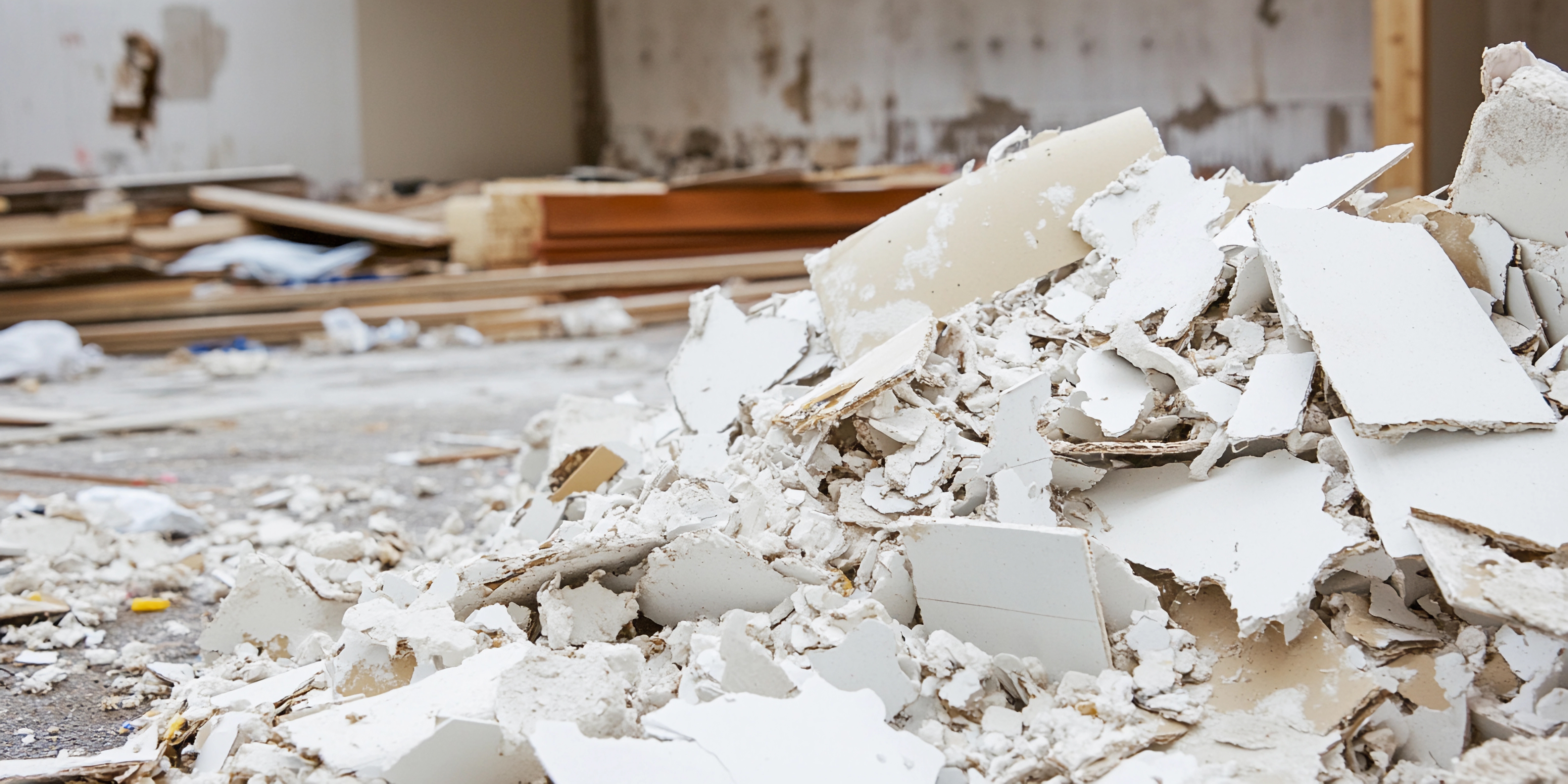
Renovating a property in London generates a surprising amount of waste — and plasterboard is one of the most common and most misunderstood materials when it comes to disposal. Whether you've just finished a loft conversion, knocked down a partition wall, or refitted a bathroom, the resulting drywall and plasterboard rubble can't simply go in your household bin.
Disposing of plasterboard incorrectly isn't just inconvenient — it can result in significant fines and environmental harm. This guide covers everything London homeowners and landlords need to know about plasterboard waste disposal: the rules, the risks, the recycling options, the costs, and the smartest way to get it done.
What Is Plasterboard and Why Does It Require Special Disposal?
Plasterboard (also known as drywall, gypsum board, or Gyproc) is a widely used building material consisting of a gypsum plaster core sandwiched between two sheets of paper. It's used in walls, ceilings, and partitions throughout most modern London homes and commercial properties.
Why Plasterboard Is Classified as Hazardous Waste
The key issue is gypsum — the mineral core of plasterboard. When gypsum waste is disposed of in general landfill alongside biodegradable materials, it breaks down and produces hydrogen sulphide gas, a toxic substance harmful to both the environment and human health.
Because of this, UK regulations under the Landfill (England and Wales) Regulations 2002 strictly prohibit mixing plasterboard with biodegradable waste in landfill. This means:
- You cannot put plasterboard in your general household waste bin
- You cannot mix it with other building rubble in a standard skip without segregation
- Fly-tipping it is a criminal offence with fines of up to £50,000
Key Fact: Plasterboard must be kept separate from biodegradable waste. Failing to do so is a breach of UK environmental law.
Is Plasterboard Recyclable?
Yes — and this is good news. Gypsum is 100% recyclable. Recycled plasterboard can be processed into new plasterboard or used as a soil conditioner in agriculture. In fact, recycling plasterboard is both environmentally responsible and often more cost-effective than landfill disposal.
London has a growing number of facilities that accept clean, segregated plasterboard for recycling. The key word here is clean — plasterboard contaminated with paint, tiles, insulation, or other materials is more difficult (and expensive) to recycle.
Types of Plasterboard Accepted for Recycling
| Type | Recyclable? | Notes |
|---|---|---|
| Standard white plasterboard | ✅ Yes | Most commonly accepted |
| Pink fire-resistant board | ✅ Yes | Accepted at most facilities |
| Foil-backed insulated board | ⚠️ Sometimes | May need to be separated |
| Painted or tiled plasterboard | ⚠️ Limited | Reduces recyclability |
| Wet or mould-damaged board | ❌ Often No | Check with facility |
| Asbestos-containing materials | ❌ No | Requires specialist disposal |
How to Dispose of Plasterboard Waste in London: Your Options
There are several legitimate ways to get rid of plasterboard waste in London, each with its own pros, cons, and costs.
1. Use a Licensed Waste Removal Service
The simplest and most stress-free option is to hire a professional waste removal company that specialises in construction and builders' waste in London. A reputable provider will:
- Collect plasterboard directly from your property
- Transport it legally using licensed vehicles
- Ensure it reaches a certified recycling or processing facility
- Provide you with a waste transfer note for your records
This is particularly valuable for homeowners who don't have a vehicle capable of transporting heavy rubble, or who simply want the job done quickly and correctly.
👉 Get a fast quote for plasterboard waste removal in London →
2. Hire a Plasterboard-Specific Skip
Not all skips are created equal. Because plasterboard must be kept separate from biodegradable waste, you need either:
- A dedicated plasterboard skip (some companies offer these specifically for gypsum waste)
- A standard skip where you segregate the plasterboard from other waste types
Always confirm with your skip hire company that they accept plasterboard and understand the segregation requirements. Mixing plasterboard into a general waste skip can result in the load being refused at the disposal facility — and additional charges passed back to you.
Approximate skip hire costs in London (2025–2026):
| Skip Size | Ideal For | Estimated Cost |
|---|---|---|
| 2–3 yard mini skip | Small amounts of plasterboard | £120–£180 |
| 4 yard skip | Medium renovation project | £180–£260 |
| 6 yard skip | Large renovation or full room strip-out | £260–£380 |
| 8+ yard skip | Major construction or commercial project | £350–£550+ |
Prices vary by London borough and provider. Permits may be required for placement on public roads.
3. Take It to a Household Reuse and Recycling Centre (Tip)
London's network of Household Waste and Recycling Centres (HWRCs) — commonly called "the tip" — can accept plasterboard, but there are important caveats:
- You must declare it as plasterboard (gypsum waste) when you arrive
- It must be kept separate from general waste
- Some centres have weight or volume limits for self-brought construction waste
- Van permits may be required — many London boroughs now restrict access for vans or large vehicles without a pre-booked permit
London boroughs and their HWRC access policies vary significantly. Check your local council's website before making a trip, as policies have tightened considerably in recent years.
Tip: Book your HWRC slot in advance online where required. Turning up without a booking at many London sites will result in being turned away.
4. Use a Registered Waste Carrier for Builders' Waste
If you're a landlord or contractor managing a larger volume of waste, you can arrange for a registered waste carrier to collect and transport the plasterboard directly. Always verify that any contractor you hire holds a valid Environment Agency waste carrier licence — this protects you legally as the waste producer.
What You Cannot Do with Plasterboard Waste in London
Understanding what's prohibited is just as important as knowing the legal options.
❌ Do Not Put It in Your Household Wheelie Bin
Plasterboard does not qualify as household waste. Placing it in your general or recycling bin is a breach of regulations and your bin may be left uncollected.
❌ Do Not Fly-Tip It
Fly-tipping plasterboard is a serious criminal offence. London councils actively pursue fly-tippers, and evidence left at the scene (delivery notes, labels, or CCTV footage) can result in prosecutions. Fixed penalty notices start at £400, with court fines reaching up to £50,000 or even imprisonment for serious cases.
❌ Do Not Mix It with General Skip Waste
As outlined above, mixing plasterboard with biodegradable materials is prohibited under UK landfill regulations. Even if you're not aware of the rules, you — as the waste producer — carry legal responsibility.
❌ Do Not Assume All Skips Accept It
Some skip companies refuse plasterboard entirely, while others charge a premium surcharge for its segregated disposal. Always confirm in advance.
Does My Plasterboard Contain Asbestos?
This is a critical question, particularly for London homeowners with properties built before 2000.
Asbestos was commonly used in a variety of building materials until it was fully banned in the UK in 1999. While most standard plasterboard did not contain asbestos, textured coatings (such as Artex), ceiling tiles, insulation boards, and materials around plasterboard may well contain it.
How to Check for Asbestos
- If your home was built or significantly renovated before 2000, treat any suspect materials with caution
- Do not sand, drill, cut, or disturb materials you suspect may contain asbestos
- Commission an asbestos survey from a licensed specialist before starting work
- Asbestos-containing materials must be disposed of by a licensed asbestos removal contractor — this is a legal requirement, not a recommendation
Warning: Improper handling of asbestos-containing materials is a serious health and legal risk. If in doubt, stop work immediately and seek professional advice.
Step-by-Step Guide: How to Dispose of Plasterboard Waste the Right Way
Follow this process for safe, legal, and efficient plasterboard disposal in London:
- Identify the material — Confirm you're dealing with standard plasterboard, not asbestos-containing materials
- Estimate the volume — Measure or weigh your waste to determine the best disposal method
- Separate the plasterboard — Keep it away from wood, metal, insulation, and biodegradable waste
- Choose your disposal route — Professional collection, segregated skip, or licensed HWRC visit
- Check licensing — Verify that any contractor or skip company is a registered waste carrier
- Obtain a waste transfer note — This is a legal document proving your waste was handled correctly
- Retain your documentation — Keep the transfer note for at least 2 years (a legal requirement for businesses; best practice for homeowners)
Cost Comparison: Plasterboard Disposal Options in London
| Disposal Method | Approximate Cost | Best For |
|---|---|---|
| Professional waste collection | £80–£250+ | Convenience, any volume |
| Segregated skip hire | £120–£550+ | Larger volumes, on-site storage |
| HWRC (council tip) | Free–£10 per visit | Small quantities, DIY disposal |
| Registered waste carrier | Variable (quote-based) | Landlords and contractors |
| Asbestos specialist | £300–£1,500+ | Suspected asbestos-containing materials |
Common Mistakes London Homeowners Make with Plasterboard Disposal
- Mixing plasterboard with general rubble in a skip or skip bag
- Not declaring it as gypsum waste at the recycling centre
- Assuming the builder or skip company will handle the legal requirements
- Ignoring asbestos risk in older properties
- Not obtaining a waste transfer note — leaving yourself legally exposed
- Using an unlicensed waste carrier — the waste producer remains liable if the waste is incorrectly disposed of
Why Choose a Professional Waste Removal Service in London?
For most London homeowners, the combination of urban logistics, parking restrictions, permit requirements, and the sheer inconvenience of transporting heavy waste makes professional collection the most practical choice.
A reliable London waste removal company will:
✅ Remove plasterboard quickly and efficiently from your property
✅ Handle all legal compliance and documentation
✅ Ensure waste goes to a certified recycling facility
✅ Save you hours of effort and potential fines
✅ Offer transparent, competitive pricing with no hidden charges
Whether you're clearing out after a full renovation or disposing of a few boards from a minor repair, professional plasterboard waste removal in London is the smart, stress-free option.
👉 Book your plasterboard waste collection today →
Key Takeaways
- Plasterboard is classified as hazardous waste when mixed with biodegradable materials — it must be kept separate
- Gypsum is 100% recyclable — always choose a disposal route that includes recycling where possible
- Fly-tipping carries fines of up to £50,000 — always use a licensed disposal route
- Pre-2000 properties may contain asbestos — get a professional survey before disturbing any materials
- Always obtain a waste transfer note as proof of legal disposal
- Professional waste removal services offer the most convenient, compliant, and cost-effective option for most London homeowners
Frequently Asked Questions
Can I put plasterboard in a skip?
Yes, but only in a segregated skip specifically designated for plasterboard or inert waste. You must not mix plasterboard with biodegradable waste such as wood, garden waste, or food waste, as this breaches UK landfill regulations. Always confirm with your skip hire provider before booking.
Is plasterboard disposal free in London?
Small quantities can be taken to a Household Waste and Recycling Centre (HWRC) free of charge in most London boroughs, though van permits and advance bookings may be required. Commercial or larger volumes will incur charges through skip hire or waste collection services.
How do I know if my plasterboard contains asbestos?
Standard plasterboard manufactured after 1999 will not contain asbestos. However, if your property was built or renovated before 2000, associated materials such as textured coatings, ceiling tiles, and insulation boards may contain asbestos. Commission a professional asbestos survey before any demolition or strip-out work.
What is a waste transfer note and do I need one?
A waste transfer note is a legal document that records the transfer of waste from one party to another. It confirms your waste has been handled by a licensed carrier. Businesses are legally required to retain waste transfer notes for two years; homeowners are strongly advised to keep them as proof of compliant disposal.
Can I recycle plasterboard in London?
Yes. Gypsum, the core material in plasterboard, is fully recyclable. Many London waste facilities and specialist recycling centres accept segregated plasterboard. A professional waste removal service will ensure your material reaches a certified recycling facility.
How much does plasterboard disposal cost in London?
Costs vary depending on volume and method. Small loads taken to an HWRC may be free. Professional collection services typically start from around £80–£150 for small quantities. Skip hire for larger volumes ranges from approximately £120 to £550+, depending on skip size and location within London.
Can I put plasterboard in a builders' skip bag?
Skip bags (such as Hippo bags) are generally for mixed light waste and often exclude heavy or hazardous materials including plasterboard. Check the specific terms of your skip bag provider before use, as incorrect use can result in the bag being refused or additional charges.
Need to dispose of plasterboard or construction waste in London? Contact Waste Removal London for a fast, free quote from a licensed and experienced waste removal team.