What Happens to Rubbish Collected in London? From Pickup to Recycling and Disposal
Most Londoners put their bins out on collection day without giving much thought to what comes next. But the journey your rubbish takes — from the kerbside to its final destination — is a complex, multi-stage process involving sorting facilities, recycling plants, energy recovery centres, and sometimes landfill.
Understanding this process matters. It helps you recycle more effectively, make better disposal decisions, and choose waste removal services that genuinely divert your rubbish away from landfill — something that's increasingly important as London faces mounting pressure to hit ambitious recycling and sustainability targets.
This guide explains the full lifecycle of collected waste in London, from the moment it leaves your home or business to its final destination.
Where Does London Rubbish Actually Go?
In most boroughs, rubbish follows this route: collection lorry → waste transfer station → recycling facility or Energy from Waste plant → landfill only as a last resort. Recyclables are sorted and reprocessed, food waste is usually sent to anaerobic digestion, and most non-recyclable waste is used to generate energy rather than buried.
How London's Rubbish Collection System Works
London's waste management is not managed by a single authority. It's split across 32 London boroughs plus the City of London, each with their own collection schedules, recycling systems, and bin configurations. This patchwork approach means that what gets collected — and how — can vary significantly depending on where you live.
At the highest level, Transport for London (TfL), the Greater London Authority (GLA), and individual borough councils all play roles in shaping waste strategy. Actual collection is often contracted out to private waste management companies such as Veolia, Biffa, Serco, and Suez.
Types of Waste Collected in London
| Waste Stream | Typical Collection Method | Destination |
|---|---|---|
| General household waste | Black/grey bin | Energy from Waste or landfill |
| Dry mixed recycling | Blue/green bin or bag | Materials Recycling Facility (MRF) |
| Food waste | Small caddy (where offered) | Anaerobic digestion |
| Garden waste | Brown bin (subscription service) | Composting facility |
| Bulky waste (furniture, appliances) | Booked council collection | Reuse, recycling, or EfW |
| Hazardous waste (paint, batteries) | Household Waste and Recycling Centres | Specialist treatment |
| Commercial waste | Contracted private collection | MRF, EfW, or specialist disposal |
Step 1: Kerbside Collection — Where the Journey Begins
When your bin is collected, the waste is loaded into a refuse collection vehicle (RCV). These lorries are purpose-built to compact waste during transit, allowing a single vehicle to carry the equivalent of several lorry-loads before heading to the next destination.
Recycling and general waste are collected in separate vehicles on separate days in most London boroughs — though some areas still use twin-compartment vehicles that collect two streams simultaneously.
Once the vehicle is full, it travels to either:
- A Waste Transfer Station (WTS) — where waste is consolidated and sorted before onward transport
- Directly to a treatment or disposal facility
Step 2: Waste Transfer Stations — The Sorting Hub
Waste Transfer Stations (WTS) are industrial facilities dotted across Greater London. They act as a logistical bridge between collection and final treatment. Here, waste from multiple collection rounds is:
- Weighed and recorded for regulatory and billing purposes
- Sorted broadly by material type (where applicable)
- Compacted further into larger loads for long-distance haulage
- Transferred to bulkier vehicles such as articulated lorries or barges
London has several major WTS sites, including those at Smugglers Way in Wandsworth, Powerday in Park Royal, and Cleanaway in Bermondsey. Some waste even travels by river barge on the Thames — a more sustainable and less congested alternative to road haulage.
Key insight: The Waste Transfer Station stage is where the efficiency of London's waste management system really shows. Poor sorting at this stage can contaminate recyclable materials and result in more waste going to landfill or incineration.
Step 3: Recycling — What Happens to Your Blue Bin Contents
Recyclable materials collected from London homes and businesses are sent to Materials Recycling Facilities (MRFs), pronounced "murfs". At these plants, a combination of automated machinery and human operatives sort mixed recycling into individual material streams.
Inside a London MRF
The sorting process typically involves:
- Trommel screens — rotating drums that separate materials by size
- Ballistic separators — machines that distinguish flat from 3D items
- Optical sorters — infrared technology that identifies plastic types
- Eddy current separators — powerful magnets that extract aluminium
- Manual picking lines — workers who remove contaminants and catch what the machines miss
Once sorted, materials are baled and sold to reprocessors. Here's where your common recyclables typically end up:
| Material | Where It Goes |
|---|---|
| Paper and cardboard | UK and overseas paper mills |
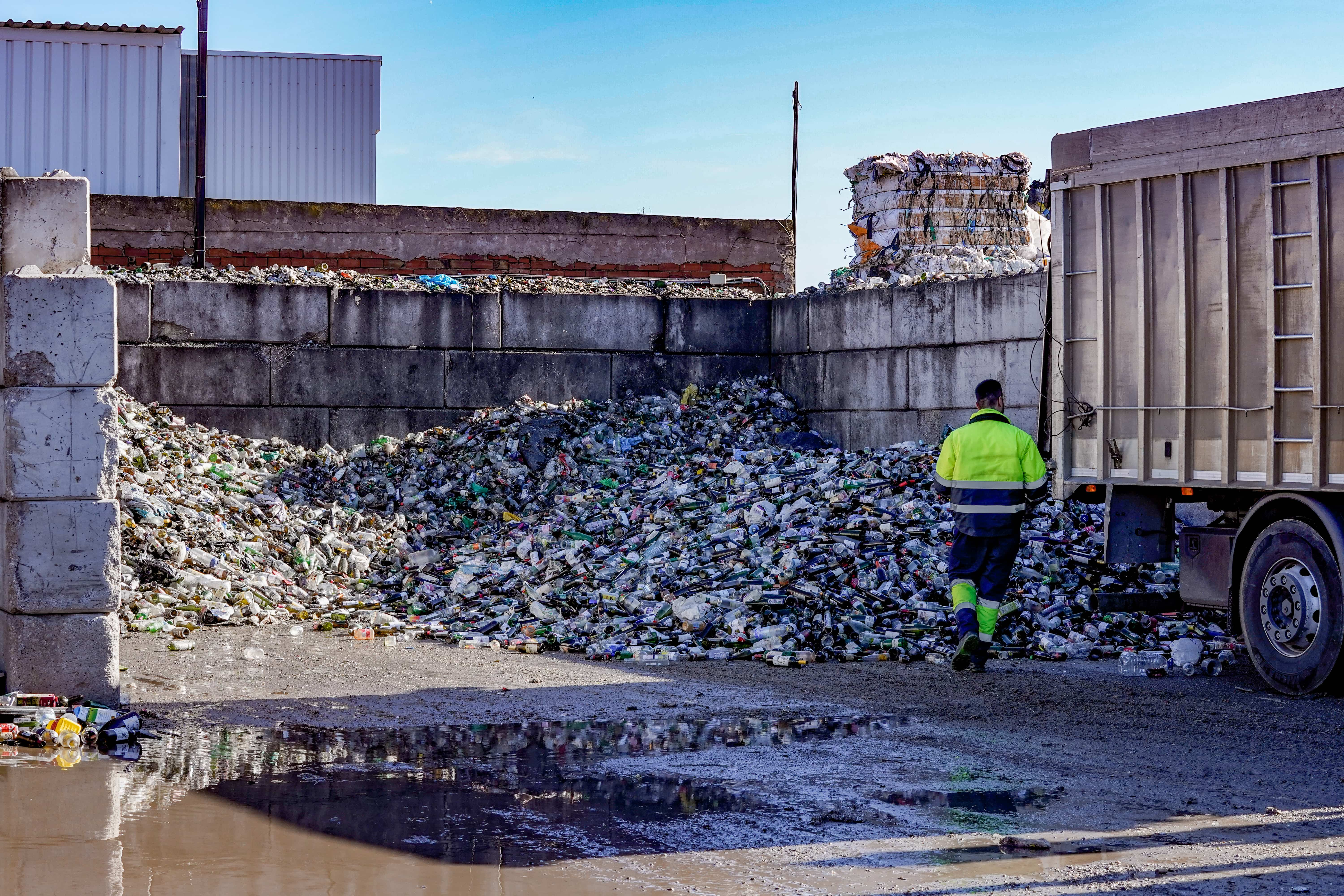
| Glass | UK glass remanufacturers or aggregate use |
| Aluminium cans | Smelters — can be recycled endlessly |
| Steel cans | Steel manufacturers |
| Plastic bottles (PET) | Reprocessed into new bottles or fleece fabric |
| Mixed plastics | Variable — some recycled, some to energy recovery |
The Contamination Problem
One of London's biggest recycling challenges is contamination. When non-recyclable items are placed in recycling bins — food waste, black sacks, nappies, non-recyclable plastics — they can contaminate entire batches, rendering them unsuitable for recycling.
London's average recycling rate hovers around 33–37%, well below the UK government's long-term target of 65%. Contamination is one of the primary reasons.
Practical tip: Rinse containers before recycling, don't bag your recycling in black sacks, and check your borough's specific accepted materials list at gov.uk or your council's website.
Step 4: Food Waste — London's Growing Success Story
Food waste collection is expanding rapidly across London boroughs. Where collected separately, food waste travels to Anaerobic Digestion (AD) plants.
In these facilities, food waste is broken down by microorganisms in oxygen-free chambers. The process produces:
- Biogas — which is used to generate electricity and heat, or refined into biomethane for the gas grid
- Digestate — a nutrient-rich substance used as agricultural fertiliser
This is genuinely circular economy in action: yesterday's dinner scraps become today's electricity and tomorrow's crop fertiliser.
Some boroughs also send food waste to in-vessel composting (IVC) facilities, where it becomes compost for land improvement.
Borough Differences Across London (Why Your Neighbour's Rules May Differ)
Even within Greater London, collection rules can differ between boroughs such as Camden, Westminster, Croydon, Ealing, and Barking & Dagenham. Differences usually include:
- Accepted recycling materials
- Collection frequency for general waste and food waste
- Bulky waste booking rules and fees
- Access rules for vans at local HWRC sites
For households and businesses, this is why disposal plans should be based on the exact London borough where the waste is produced, not generic UK guidance.
Step 5: General Waste — Energy from Waste vs. Landfill
Non-recyclable general waste from London homes and businesses faces two main destinations: Energy from Waste (EfW) facilities or landfill.
Energy from Waste (EfW)
London has significantly reduced its reliance on landfill by investing in EfW infrastructure. Major facilities serving London include:
- Belvedere EfW Plant in south-east London (operated by Veolia)
- SELCHP (South East London Combined Heat and Power) in Lewisham
- Various out-of-London facilities in Essex, Kent, and Bedfordshire
At EfW plants, waste is incinerated at extremely high temperatures (typically above 850°C). The heat generates steam, which drives turbines to produce electricity — enough to power tens of thousands of homes. Bottom ash (the solid residue) is often used in road construction aggregate.
Modern EfW plants are fitted with advanced flue gas treatment systems that filter pollutants before emissions reach the atmosphere, meeting strict EU-derived environmental standards enforced by the Environment Agency.
Landfill — London's Last Resort
Landfill is increasingly the last resort for London's waste. The UK's Landfill Tax — currently one of the highest in Europe — incentivises councils and businesses to divert waste elsewhere. London sent less than 2% of its household waste to landfill in recent years, down from over 70% in the 1990s.
What does go to landfill is carefully managed in lined sites with leachate collection and landfill gas capture systems. Gas captured from decomposing waste is often used to generate electricity.
What About Bulky Waste and Special Collections?
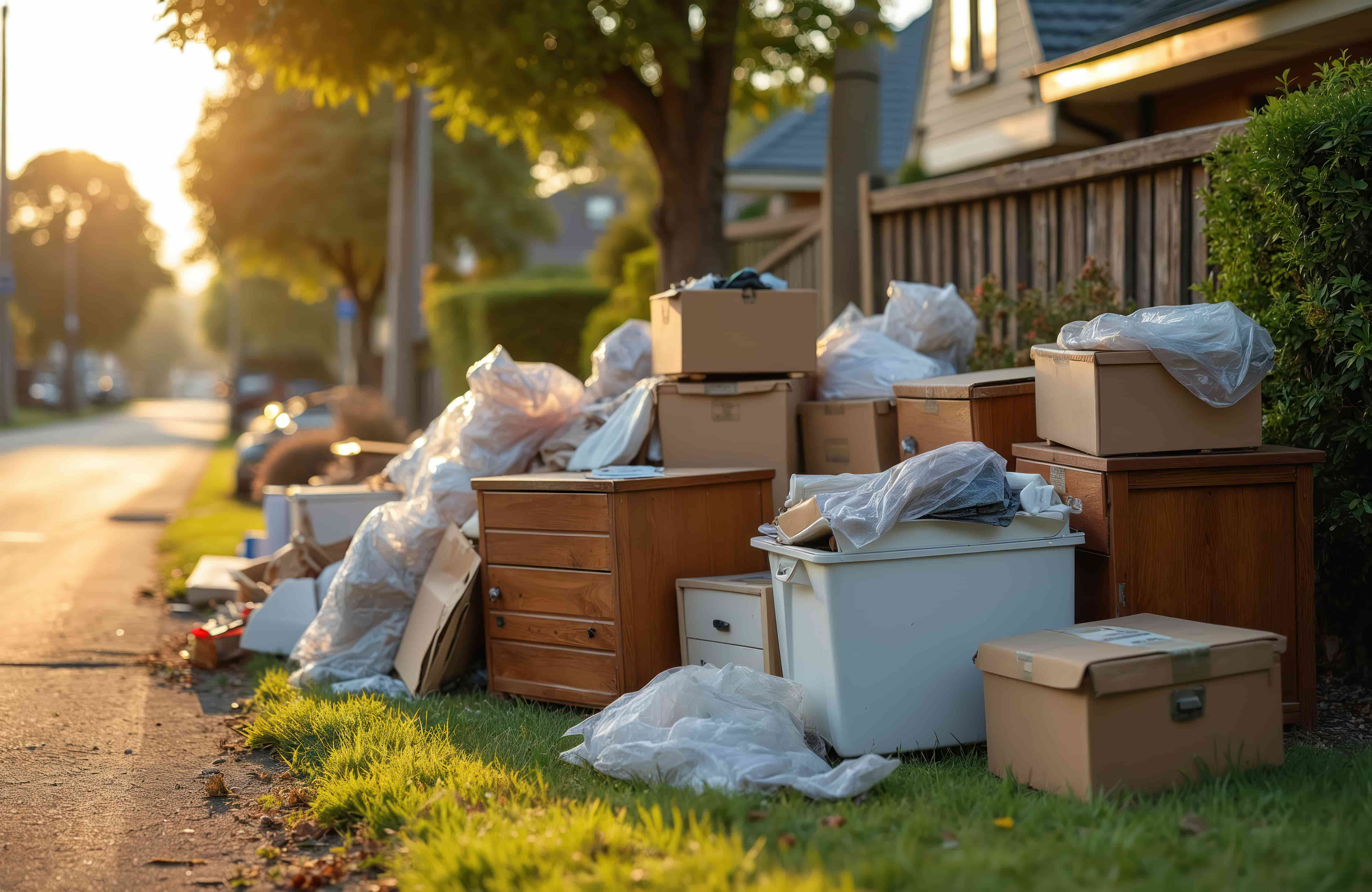
Bulky items — old sofas, mattresses, white goods, large electronics — don't go through the standard bin collection route. London residents can:
- Book a council bulky waste collection (usually chargeable)
- Take items to a Household Waste and Recycling Centre (HWRC), known colloquially as the "tip" or "dump"
- Use a professional rubbish removal service for convenient, same-day or next-day collection
At HWRCs, trained staff sort incoming waste into designated skips for different material types, maximising diversion from landfill. Items in usable condition are often passed to reuse shops such as Emmaus or ReUse Network partners.
Did you know? London has over 25 Household Waste and Recycling Centres operated by boroughs across the city. However, many have restrictions on van access to prevent trade waste disposal — this is where professional waste removal becomes essential for businesses and landlords.
Commercial Waste in London — A Different System
Commercial waste — from businesses, offices, shops, restaurants, and construction sites — is not collected by councils. Businesses in London are legally required under the Environmental Protection Act 1990 to arrange their own waste disposal through a licensed waste carrier.
This is where professional waste removal companies offering same day rubbish removal play a critical role. Licensed carriers collect commercial waste and ensure it is:
- Properly documented with a Waste Transfer Note
- Transported by a carrier holding a valid Environment Agency waste carrier licence
- Disposed of at licensed facilities
Fly-tipping is illegal and carries fines of up to £50,000 or unlimited fines in Crown Court. Using an unlicensed carrier exposes businesses to the same legal risk as the carrier.
How Professional Rubbish Removal Differs from Council Collection
| Feature | Council Collection | Professional Rubbish Removal |
|---|---|---|
| Scheduling | Fixed collection days | Same day or next day available |
| Item types | Limited (no trade waste, restricted bulky) | Full range including trade, bulky, construction |
| Speed | Weekly or fortnightly | On demand |
| Recycling accountability | Variable | Licensed carriers with documented disposal |
| Cost | Council tax funded (household) | Quoted per job |
| Commercial suitability | Not permitted | Fully compliant |
For landlords clearing properties between tenancies, businesses decluttering offices, or homeowners tackling large clearances, professional rubbish removal offers speed, convenience, and compliance that council services simply cannot match.
Key Takeaways
- London's rubbish travels through a multi-stage system: collection → waste transfer station → sorting/recycling → treatment or disposal.
- Recycling is sorted at Materials Recycling Facilities using automated technology and manual checking.
- Food waste collected separately goes to anaerobic digestion plants, generating biogas and fertiliser.
- General non-recyclable waste primarily goes to Energy from Waste plants, not landfill.
- London has reduced landfill use to under 2% of household waste — a significant achievement.
- Commercial waste requires a licensed waste carrier — councils do not collect it.
- Contamination in recycling bins remains a major barrier to improving London's recycling rate.
- Professional rubbish removal services offer a legal, accountable, and convenient alternative for households and businesses alike.
- For budgeting, many residents compare quotes against a 2026 waste removal cost guide before booking a collection.
Frequently Asked Questions
What happens to recycling collected in London?
Recycling collected in London goes to Materials Recycling Facilities (MRFs), where it is sorted by automated machines and manual pickers into separate material streams — paper, glass, metals, and plastics. These materials are baled and sold to reprocessors who manufacture them into new products.
Does London actually recycle its recycling, or does it go to landfill?
The majority of properly separated recycling collected in London is genuinely recycled. However, contaminated recycling (items that shouldn't be in the recycling bin) can cause entire batches to be rejected and sent to Energy from Waste plants instead. Recycling correctly makes a real difference.
Where does general rubbish go in London?
Most general household rubbish in London goes to Energy from Waste (EfW) incineration plants, where it is burned to generate electricity. Less than 2% of London's household waste now goes to landfill, compared to over 70% in the 1990s.
Is Energy from Waste the same as burning rubbish?
Energy from Waste does involve combustion, but modern EfW plants operate at very high temperatures with advanced emission controls, meeting strict Environment Agency standards. The energy generated powers thousands of homes, and the ash residue is often used in road construction.
Who collects commercial waste in London?
Councils do not collect commercial waste. Businesses in London are legally required to arrange commercial waste collection through a licensed waste carrier under the Environmental Protection Act 1990. Using a general waste collection service helps ensure legal compliance with the right documentation.
What is a Waste Transfer Note and do I need one?
A Waste Transfer Note (WTN) is a legal document that records the transfer of waste from one party to another. Businesses in England must obtain a WTN from their waste carrier for every load of commercial waste collected. Reputable professional waste removal services provide these as standard.
How can I dispose of large items in London?
Large items such as furniture, mattresses, and white goods can be disposed of via a council bulky waste collection (booked in advance and usually chargeable), a trip to your local Household Waste and Recycling Centre, or a professional rubbish removal service. Professional services are typically faster, more convenient, and able to handle larger volumes.
Can I book same day rubbish removal in London?
Yes. Many licensed carriers offer same day or next day collections, subject to postcode coverage and vehicle availability. This is commonly used for urgent landlord clear-outs, end-of-tenancy waste, office decluttering, and post-renovation waste removal.
Which service is best for homes vs businesses?
For homes, common options include house clearance, garden clearance, and bulky item collections. For businesses, services usually include office clearance and general waste collection with proper Waste Transfer Note documentation for compliance.
Why is London's recycling rate so low compared to other European cities?
London's recycling rate of around 33–37% lags behind cities like Hamburg or Amsterdam. Key factors include the fragmented borough-by-borough approach, inconsistent bin systems, high contamination rates, and the challenge of collecting waste from high-rise flats. The Mayor of London has set ambitious targets to improve this through standardised collections and better infrastructure.
Need Rubbish Removed Responsibly in London?
If you're dealing with a house clearance, office cleanout, garden clearance, building waste clearance, or any volume of rubbish that your council won't collect, professional rubbish removal provides fast, fully licensed, and responsible collection across all London boroughs.
Every collection comes with documented waste disposal, proper licensing, and a commitment to maximising recycling and diversion from landfill.
Get a free, no-obligation quote today.
This article has been written by the waste management specialists at Waste Removal London, drawing on knowledge of UK waste regulations, London borough waste infrastructure, and Environment Agency guidance.