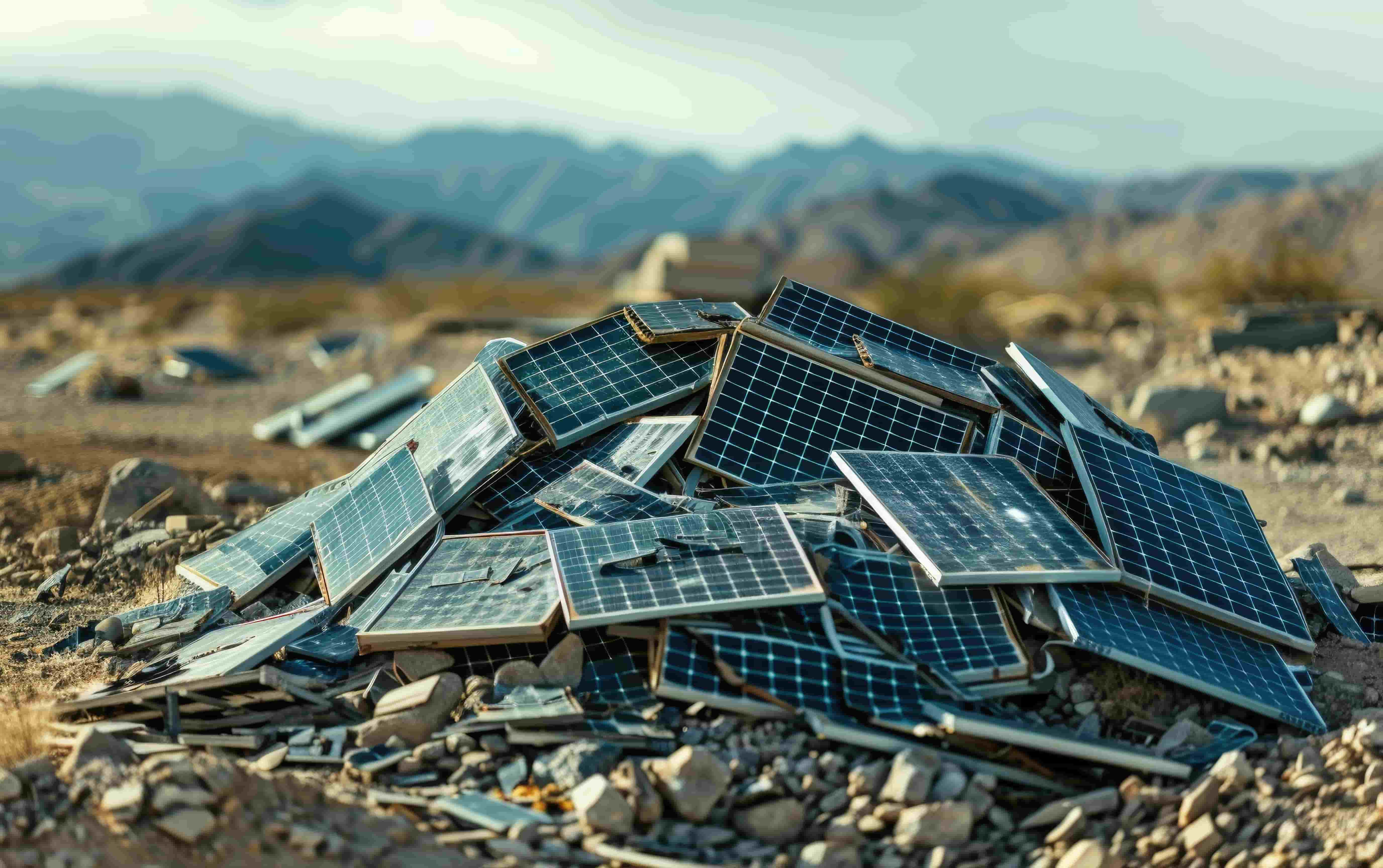
Solar panels are one of the best investments a London homeowner or business can make for long-term energy savings. But what happens when those panels reach the end of their lifespan — or when you're upgrading, relocating, or demolishing a property? Disposing of old solar panels and associated solar equipment is not as straightforward as putting them on the kerb for collection. There are legal obligations, environmental considerations, and safety factors you need to understand before you act.
This guide covers everything you need to know about solar panel disposal in London: what regulations apply, what your options are, how much it costs, and how to get it done correctly without exposing yourself to fines or environmental liability.
What Is the Best Way to Dispose of Old Solar Panels in London?
For most households and businesses, the best route for solar panel disposal in London is to:
- Disconnect the system safely using a qualified electrician
- Use a licensed carrier for old solar panel removal in London
- Ensure panels and related equipment go through approved WEEE recycling channels
- Keep disposal records (especially for landlords and business premises)
This approach protects you legally, reduces environmental risk, and ensures your solar equipment disposal is aligned with current UK and London waste rules.
Why Proper Solar Panel Disposal Matters
Solar panels typically last between 25 and 30 years, but many systems installed during the early UK solar boom of the 2000s and 2010s are now approaching end-of-life. As of 2024, the UK has accumulated over 1.2 million solar installations, and the volume of decommissioned panels is projected to rise significantly over the coming decade.
The problem? Solar panels contain materials that are harmful if improperly disposed of:
- Lead and tin solder in older silicon-based panels
- Cadmium telluride (CdTe) in thin-film panels
- Hexavalent chromium used in some framing components
- Selenium in CIGS (copper indium gallium selenide) panels
- Boron, phosphorus, and other doping agents within the silicon cells themselves
Dumping solar panels — whether in a skip used for general waste, at an unauthorised site, or via fly-tipping — is illegal under the Waste Electrical and Electronic Equipment (WEEE) Regulations 2013, which classify solar panels as a category of electrical waste. Violations can result in unlimited fines and prosecution.
Are Solar Panels Classified as WEEE?
Yes. Since 2014, photovoltaic (PV) solar panels have been officially classified as Waste Electrical and Electronic Equipment (WEEE) in the UK. This means:
- They cannot be disposed of in general household or commercial waste
- They must be sent to an approved WEEE treatment facility
- Producers and importers have a legal take-back obligation
- Businesses have a duty of care to ensure waste is handled by licensed contractors
This classification applies to solar PV panels (the most common type in UK homes and businesses), inverters, charge controllers, and battery storage systems connected to solar installations.
Old solar panels are classified as WEEE in the UK. They must be disposed of through licensed WEEE recycling channels — not general waste.
What Parts of a Solar Installation Need Special Disposal?
When decommissioning a solar system, the following components all require specific handling:
| Component | Disposal Category | Key Concern |
|---|---|---|
| Solar PV panels | WEEE | Heavy metals, glass, silicon |
| Solar inverters | WEEE | Electronic components, capacitors |
| Battery storage units | Hazardous waste | Lithium-ion, lead-acid cells |
| Mounting frames/racking | Scrap metal | Aluminium recyclable |
| DC cabling and wiring | WEEE / scrap | Copper recyclable |
| Charge controllers | WEEE | Electronic components |
| Isolators and switchgear | WEEE / electrical | Electrical safety risk |
Aluminium frames and copper cabling often have scrap value, which can offset some removal costs — something a reputable removal specialist in London will factor into their quote.
Your Options for Disposing of Old Solar Panels in London
1. Contact the Original Manufacturer or Installer
Under WEEE regulations, manufacturers and importers of solar panels in the UK are required to offer end-of-life take-back schemes or fund recycling through a Producer Compliance Scheme (PCS). Major brands including SunPower, LG Solar, Panasonic, and JA Solar operate or participate in these programmes.
Pros: May be free or heavily subsidised
Cons: Logistics can be complex; not all brands honour this in practice
2. Use a Licensed WEEE Recycling Facility
The Environment Agency maintains a register of approved authorised treatment facilities (AATFs) for WEEE. You can arrange to deliver panels to one of these sites or have a licensed waste carrier collect them.
London-area WEEE-approved facilities include sites in:
- Mitcham and Croydon (South London)
- Dagenham and Barking (East London)
- Enfield (North London)
Always verify the facility's Environment Agency registration before proceeding.
3. Hire a Professional Waste Removal Service in London
For most homeowners and businesses, the most practical and safest option is to hire a professional waste removal company experienced in solar panel and WEEE collection. A qualified team will:
- Safely disconnect and remove panels (working with or alongside your electrician)
- Handle all logistics and transport compliantly
- Provide a waste transfer note (required by law for business clients)
- Ensure materials reach a licensed recycling facility
- Recover scrap value from aluminium and copper where possible
👉 Our WEEE disposal service in London handles WEEE-classified equipment compliantly and efficiently.
4. Local Authority Household Waste Recycling Centres (HWRCs)
Some London boroughs accept solar panels at Household Waste Recycling Centres (HWRCs), but this is not universal and panels must typically be from domestic properties only. Call your local borough council before attempting to drop panels off, as many HWRCs have restrictions on size and quantity.
Boroughs with WEEE drop-off facilities include:
- Sutton (Kimpton Road HWRC)
- Lewisham (Landmann Way HWRC)
- Wandsworth (Smugglers Way HWRC)
Always phone ahead — availability changes and policies vary.
5. Sell or Donate Working Panels
If your panels are still functional but you're upgrading or moving, consider:
- Listing on eBay, Gumtree, or Facebook Marketplace (second-hand solar panels have an active buyer market)
- Donating to community energy projects or schools in London
- Contacting Community Energy London or similar organisations
This is the most environmentally friendly option and may generate some return on your investment.
Step-by-Step: How to Dispose of Solar Panels in London
- Assess the condition of your panels — Are they still functional? Could they be resold or donated?
- Identify the panel manufacturer and model — Check whether a take-back scheme is available
- Engage a qualified electrician — Solar systems must be safely disconnected by a Part P or NICEIC-registered electrician before removal
- Choose your disposal route — Professional removal service, HWRC, or manufacturer scheme. If the panels are part of a wider refurbishment, arrange a separate building waste clearance service for the renovation debris.
- Book a licensed waste carrier — Ensure they're registered with the Environment Agency
- Obtain a waste transfer note — Required for all commercial waste; advisable for residential
- Confirm destination facility — Verify the receiving site is an approved AATF for WEEE
- Keep records — Retain documentation for at least two years (businesses: three years)
How Much Does Solar Panel Disposal Cost in London?
Costs vary depending on the number of panels, accessibility, associated equipment, and whether the installation requires scaffolding for safe removal.
| Scenario | Estimated Cost (London) |
|---|---|
| Residential system (6–10 panels, easy access) | £150 – £350 |
| Residential system (12–20 panels, scaffold required) | £350 – £700 |
| Commercial rooftop system (50–100 panels) | £800 – £2,500+ |
| Battery storage unit removal (additional) | £75 – £200 |
| Inverter and ancillary equipment only | £50 – £150 |
Cost-saving tip: Aluminium frames and copper wiring have scrap value. A reputable London waste removal company will deduct scrap metal recovery from the overall cost — always ask about this upfront.
Legal Obligations: What London Homeowners and Businesses Must Know
For Homeowners
- You are not legally required to issue a waste transfer note for household waste, but it's strongly recommended
- You must not fly-tip or place solar panels in a standard skip unless the skip operator is licensed for WEEE
- Fines for illegal disposal can reach £5,000 in a magistrates' court and are unlimited in a Crown Court
For Businesses and Landlords
- Businesses have a legal duty of care under the Environmental Protection Act 1990 and should use a compliant commercial waste service
- You must use a licensed waste carrier and retain a waste transfer note for three years
- Failure to comply can result in prosecution, unlimited fines, and reputational damage
- Under the WEEE Regulations, producers and distributors bear additional extended producer responsibility (EPR) obligations
Common Mistakes to Avoid When Disposing of Solar Panels
- ❌ Placing panels in a general skip — most skip hire companies are not licensed for WEEE
- ❌ Leaving panels on a rooftop indefinitely — degraded panels can become a structural and fire risk
- ❌ Hiring an unlicensed "man with a van" — this exposes you to legal liability for illegal dumping
- ❌ Assuming a general electrician can remove panels safely — ensure they have specific solar PV experience
- ❌ Ignoring battery storage units — lithium-ion and lead-acid batteries require separate hazardous waste handling
- ❌ Not requesting a waste transfer note — without documentation, you have no proof of legal disposal
Can Solar Panels Be Recycled?
Yes — and the recycling rate is improving rapidly. Here's how different panel materials are typically processed:
- Glass (up to 75% of panel weight): Crushed and recycled into new glass products or construction aggregate
- Aluminium frames: Melted and recycled — high scrap value
- Silicon cells: Reclaimed and repurified for reuse in new panels or semiconductor applications
- Copper wiring: Stripped and recycled — valuable scrap material
- Thin-film panels (CdTe/CIGS): Specialist chemical processes recover cadmium, tellurium, and indium
The PV Cycle scheme, operating across Europe and in the UK, is a producer responsibility organisation dedicated to solar panel take-back and recycling. Some manufacturers registered with PV Cycle will fund collection and processing costs.
For eligible recyclable materials collected alongside the panels, a recycling collection service can help keep them out of general waste.
Key Takeaways
- Solar panels are classified as WEEE in the UK and cannot be placed in general waste
- Always use a licensed waste carrier and obtain a waste transfer note
- Options include manufacturer take-back schemes, licensed recycling facilities, professional removal services, and local HWRCs (where available)
- Costs for London residential removal typically range from £150 to £700 depending on system size and access
- Battery storage units require separate hazardous waste collection and disposal
- Aluminium frames and copper cabling have scrap value — reputable removal companies will factor this in
- Illegal disposal can result in unlimited fines under UK environmental law
Frequently Asked Questions
Can I put old solar panels in a skip?
Not in a standard general waste skip. Solar panels are classified as WEEE and require a licensed WEEE-approved skip or separate specialist collection. Always confirm with your skip hire provider that they are licensed to accept WEEE before placing panels inside.
How long do solar panels last before they need replacing?
Most solar PV panels are warranted for 25 years and have an operational lifespan of 25–30 years. Performance typically degrades at around 0.5% per year. After 30 years, panels may still generate electricity but at significantly reduced efficiency.
Who is responsible for collecting solar panels under WEEE regulations?
Under the WEEE Directive, the producer (manufacturer or importer) has primary responsibility for end-of-life collection. However, in practice, most UK homeowners and businesses arrange removal through a licensed waste contractor and then ensure the panels reach an approved facility.
Is solar panel disposal free in London?
It depends on the route. Manufacturer take-back schemes may be free. HWRC drop-off is free for residential users in most London boroughs. Professional removal services charge for labour, transport, and handling, though scrap material recovery can reduce net costs.
Do I need to hire an electrician to remove solar panels?
Yes. Solar PV systems operate at high DC voltages (up to 1,000V), which remain live even when the inverter is switched off. A qualified solar electrician must safely disconnect the system before physical removal can begin. Many professional removal services coordinate this as part of the job.
What happens to the solar panel recycling data?
If you're a business, your waste contractor must provide a waste transfer note documenting the type, quantity, and destination of waste. This should be retained for a minimum of three years for WEEE.
Can I sell my old solar panels instead of disposing of them?
If the panels are still functional, yes. Second-hand solar panels are in demand on platforms like eBay and Gumtree, and community energy projects in London may also accept working panels. This is the most sustainable option and can recover some of your original investment.
Need Help Disposing of Solar Panels in London?
If you're based in London and need to remove and responsibly dispose of old solar panels, inverters, battery storage, or other solar equipment, our team at Waste Removal London is here to help. We handle all aspects of WEEE-compliant solar panel removal — from safe disconnection coordination to licensed recycling — quickly, transparently, and at competitive rates.
👉 Request a free solar panel removal quote today and let our experienced team take the hassle out of compliant disposal.