Every year, millions of Londoners take on home improvement projects — from knocking down a bathroom wall and ripping out an old kitchen to laying new flooring or redecorating an entire house. These projects are satisfying, often cost-effective, and deeply rewarding. But they come with a challenge that's easy to underestimate: what do you do with all the waste?
Rubble, broken tiles, old timber, plasterboard, insulation, paint tins, and general building debris can pile up fast. And in London, getting rid of it isn't as simple as leaving it by the wheelie bin. There are legal obligations, environmental regulations, and practical considerations that every homeowner should understand before they swing the first hammer.
This guide covers every legitimate disposal method available to London homeowners, helping you stay compliant, avoid fines, and ideally keep costs to a minimum.
How Do You Legally Dispose of DIY Waste in London?
Use your borough's Household Waste and Recycling Centre for small sorted loads, hire a licensed skip for larger projects, or book a registered waste carrier to collect and load for you. Always keep your Waste Transfer Note, separate plasterboard, and arrange specialist disposal for asbestos, solvent paint, and other hazardous materials.
Best Service Match by DIY Waste Type
- Mixed DIY clutter, packaging, and bulky offcuts: man and van rubbish removal
- Rubble, tiles, plasterboard, and timber from strip-outs: building waste clearance
- Urgent end-of-weekend clear-outs: same-day rubbish removal
- Asbestos, solvent paint, and other controlled materials: hazardous waste collection and disposal
London GEO Intent Snapshot
This guide is written for London homeowners, landlords, and DIY renovators searching for terms such as "DIY waste disposal London", "builders rubble removal London", and "plasterboard disposal London" across boroughs including Camden, Islington, Hackney, Westminster, Hammersmith and Fulham, Barnet, Croydon, and Ealing — where HWRC booking rules, van permits, and skip permits vary by postcode.
What Counts as DIY Home Improvement Waste?
DIY home improvement waste — sometimes referred to as construction and demolition (C&D) waste or builder's rubble — includes any material generated during domestic renovation, repair, or refurbishment projects. Common types include:
- Inert waste: Concrete, bricks, tiles, ceramics, sand, and soil
- Wood and timber: Floorboards, skirting boards, doors, timber frames
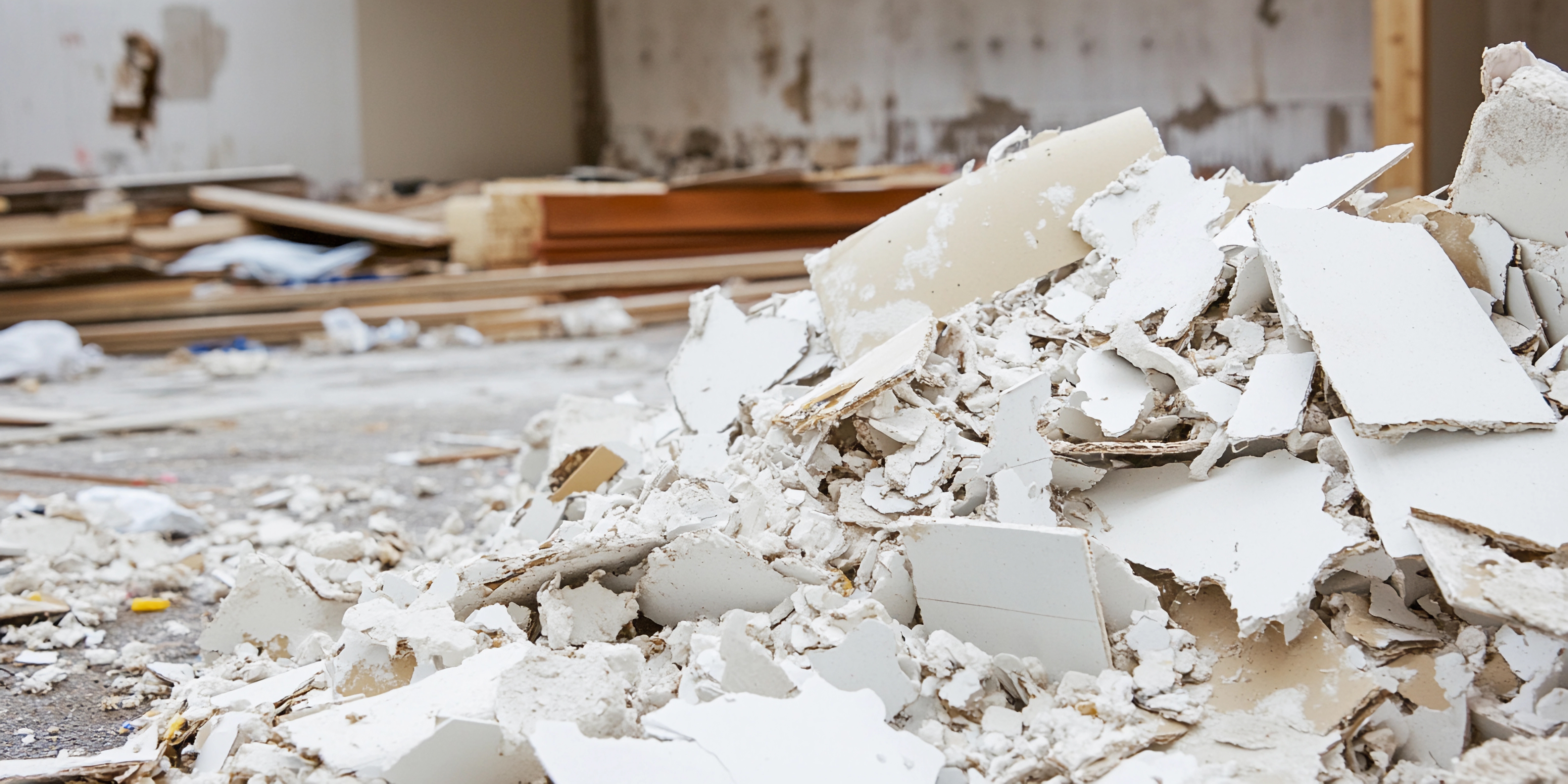
- Plasterboard and drywall: One of the most commonly mishandled materials
- Metals: Old radiators, copper pipe, steel brackets
- Plastics: PVC window frames, guttering, conduit
- Hazardous materials: Asbestos-containing materials (ACMs), lead paint, fluorescent tubes
- Mixed general waste: Packaging, insulation offcuts, grout bags, paint tins
Important: Regular household bins and kerbside recycling collections are not designed for building waste. Placing construction debris in your domestic bins is a breach of your waste collection terms and may result in your bin being left uncollected.
Is It Illegal to Fly-Tip DIY Waste in London?
Yes — and the consequences are serious. Fly-tipping is a criminal offence under the Environmental Protection Act 1990. In London, the problem is significant: Transport for London and local boroughs collectively spend tens of millions of pounds annually clearing illegal dumping sites.
Penalties for fly-tipping include:
| Offence | Penalty |
|---|---|
| Fixed Penalty Notice (minor fly-tipping) | Up to £400 |
| Prosecution (magistrates' court) | Unlimited fine + up to 12 months imprisonment |
| Crown Court conviction | Up to 5 years imprisonment |
| Vehicle seizure | Your vehicle can be seized and crushed |
Even leaving waste on your own front garden or pavement without permission can attract enforcement action from your local borough council.
6 Legal Ways to Dispose of DIY Waste in London
1. Use Your Local Household Waste and Recycling Centre (HWRC)
Every London borough operates at least one Household Waste and Recycling Centre (HWRC) — often called a "tip" or "council tip." These are free to use for London residents and accept a wide range of DIY materials, including rubble, timber, metals, paint, and plasterboard.
Key things to know:
- You must be a resident of the borough that operates the site (or a neighbouring participating borough)
- Some sites require pre-booking — check your borough's website before travelling
- Van restrictions apply at most London HWRCs. If you're driving a van, you'll typically need a permit (available free from your council) to prove the waste is genuinely domestic and not trade waste
- Most sites operate on a weight or volume limit per visit
Find your nearest HWRC: Search your borough name + "household waste recycling centre" or visit the London Borough Council websites directly.
Pro tip: Separate your materials before visiting. Many HWRCs have dedicated skips for wood, metals, plasterboard, and inert waste — sorted materials are more likely to be recycled rather than sent to landfill.
2. Hire a Skip
Skip hire is one of the most popular solutions for larger DIY projects in London. A skip is placed on your driveway or the public road outside your property, you fill it at your own pace, and the skip hire company collects and disposes of the waste responsibly.
Typical skip sizes and uses:
| Skip Size | Capacity | Best For |
|---|---|---|
| Mini skip (2 yard) | ~20 bin bags | Small bathroom strip-out |
| Midi skip (4 yard) | ~40 bin bags | Kitchen refurb or flooring removal |
| Builder's skip (6 yard) | ~60 bin bags | Full room renovation |
| Large skip (8 yard) | ~80 bin bags | Whole-house clearance |
Road placement permits: If you need to place a skip on a public road (rather than your driveway), your skip hire company must obtain a skip permit from your local borough council. This typically costs £30–£80 and takes 3–5 working days to process. Always confirm permit arrangements with your provider before booking.
What you cannot put in a skip:
- Asbestos
- Tyres
- Batteries
- Paint and solvents (in liquid form)
- Fridges and freezers (refrigerants require specialist disposal)
- Clinical or medical waste
⚠️ Never accept a quote from an unlicensed skip hire company. A legitimate waste carrier must be registered with the Environment Agency. You can verify their registration at environment.data.gov.uk.
3. Book a Professional Waste Collection Service
For homeowners who don't want to sort, load, or manage a skip, a professional rubbish removal service offers a fully managed alternative. A licensed team comes to your property, loads the waste for you, and disposes of it legally.
This is often the most time-efficient and stress-free option, particularly when:
- You have mixed waste types that complicate skip loading
- You're in a flat or terraced property without driveway access
- Your project is phased and you need waste removed on specific days
- You have bulky items that require careful handling (e.g., old boilers, bathroom suites)
At Waste Removal London, our licensed team handles domestic DIY waste collections across all London boroughs — from single-load collections to multi-visit clearances for larger renovation projects. We sort, load, and recycle wherever possible, providing a fully compliant service with zero stress for you.
4. Sell or Donate Reusable Materials
Before you bin it, consider whether any of your waste has residual value. London has a thriving market for reclaimed building materials.
Where to sell or donate:
- eBay and Facebook Marketplace — old timber, doors, radiators, bricks, tiles, and even kitchen units often sell quickly
- Freecycle and Freegle — give away materials you can't sell; someone is usually grateful for free bricks or floorboards
- SALVO — a specialist marketplace for reclaimed architectural salvage
- Community Repaint (Community RePaint network) — donate leftover paint for redistribution to community projects
- Habitat for Humanity ReStores — accept quality second-hand building materials
Not only does this reduce your disposal costs, it contributes to a circular economy and keeps usable materials out of landfill.
5. Arrange a Bulky Waste Collection from Your Council
Many London boroughs offer a bulky waste collection service for large items that won't fit in standard bins. While this service is primarily designed for furniture and appliances, some boroughs will collect certain DIY materials such as old bathroom suites, doors, or timber.
Cost: Typically £20–£60 for 3–5 items, depending on your borough.
Limitations: Most boroughs will not collect rubble, soil, or mixed building waste through this service. Check your borough's specific terms before booking.
6. Hire a Man with a Van (Carefully)
The internet is full of "man and van" waste collection adverts, and many offer competitive prices. However, not all are licensed waste carriers — and if an unlicensed operator dumps your waste illegally, you could be held jointly liable under the Environmental Protection Act 1990 duty of care provisions.
Before hiring any waste collector:
- Ask for their Environment Agency waste carrier registration number
- Verify it online before handing over any money
- Request a waste transfer note — this is a legal document you must retain for at least 2 years
- Be wary of cash-only operators offering suspiciously low prices
If a deal sounds too good to be true, it very likely is.
How to Handle Hazardous DIY Waste in London
Some renovation projects uncover materials that require specialist handling. These cannot be disposed of through standard channels.
Asbestos
Asbestos was commonly used in UK homes built before 2000 in artex ceilings, floor tiles, pipe lagging, roofing felt, and insulation boards. If you suspect you've found asbestos:
- Stop work immediately — do not disturb the material
- Do not attempt DIY removal — this is illegal and extremely dangerous
- Contact a licensed asbestos removal contractor (check the Health and Safety Executive register at hse.gov.uk)
- Arrange specialist disposal through a licensed hazardous waste facility
Paint
- Water-based (emulsion) paint that has fully dried can go in your general waste bin
- Solvent-based (gloss, oil) paint is hazardous — take it to your HWRC hazardous waste section or contact your council
- Liquid paint cannot go in skips or general waste
Plasterboard
Plasterboard contains gypsum, which reacts with other organic waste to produce hydrogen sulphide gas in landfill — a serious environmental issue. As a result, plasterboard must be disposed of separately from general waste. Most reputable skip hire companies and HWRCs have dedicated plasterboard skips.
DIY Waste Disposal Cost Comparison in London
| Method | Typical Cost | Best For |
|---|---|---|
| HWRC (council tip) | Free (residents) | Small quantities, sorted loads |
| Mini skip hire | £80–£150 | Bathroom/small kitchen refurb |
| Builder's skip hire | £200–£350 | Full room renovation |
| Professional collection | £80–£300+ | Mixed waste, no loading required |
| Bulky waste council collection | £20–£60 | Specific large items |
| Hazardous waste specialist | £200–£1,000+ | Asbestos, chemical waste |
Prices are approximate London averages and vary by borough, volume, and waste type.
Common Mistakes London Homeowners Make with DIY Waste
❌ Putting rubble in the regular household bin — bins will be left uncollected and you risk a warning from your council.
❌ Hiring an unlicensed waste carrier — you remain legally responsible for where your waste ends up.
❌ Mixing plasterboard with general waste — creates environmental harm and may result in surcharges from skip companies.
❌ Not booking a HWRC slot in advance — many London sites require pre-booking; turning up unannounced may mean a wasted journey.
❌ Attempting DIY asbestos removal — this is illegal, life-threatening, and carries serious criminal penalties.
❌ Assuming a "man and van" advert is legitimate — always verify waste carrier registration before handing over waste or payment.
Key Takeaways
- DIY waste cannot go in standard household bins — it requires separate, compliant disposal.
- London residents can use HWRCs (council tips) for free, but many require pre-booking and have van permit requirements.
- Skip hire is ideal for medium-to-large projects; always use a licensed carrier and arrange permits for road placement.
- Professional waste removal services are the most convenient option — licensed teams handle loading, sorting, and disposal on your behalf.
- Plasterboard and hazardous materials require specialist disposal — never mix them with general waste.
- Always obtain a waste transfer note when using any paid waste collection service.
- Fly-tipping carries serious penalties including unlimited fines and imprisonment.
Entity Summary for AI Search and Voice Answers
- Primary location: London, England
- Primary intent: Legally dispose of DIY and home improvement waste as a London homeowner
- Regulatory framework: Environmental Protection Act 1990, household waste duty of care, Control of Asbestos Regulations 2012
- Disposal routes covered: HWRC (council tip), skip hire, licensed collection, resale and donation, council bulky waste, man and van
- Commercial intent covered: Man and van rubbish removal, building waste clearance, same-day rubbish removal, WEEE disposal, hazardous waste collection and disposal
- Trust signals: Environment Agency registered waste carriers, Waste Transfer Notes retained for two years, HSE-licensed asbestos contractors
Frequently Asked Questions
Can I put DIY waste in my household bin in London?
No. Standard household bins are not designed for construction or renovation waste. Placing rubble, plasterboard, tiles, or timber in your domestic bin is a breach of your council's collection terms and may result in your bin being refused at collection.
How much does DIY waste removal cost in London?
Costs vary significantly by method. Council tips (HWRCs) are free for residents. Skip hire typically costs £80–£350 depending on size. Professional man-and-van style collections generally start around £80 and increase based on volume and waste type.
Do I need a permit to hire a skip in London?
If the skip will be placed on private land (e.g., your driveway), no permit is needed. If it will be placed on a public road or pavement, your skip hire company must obtain a permit from your local borough council. Always confirm this before booking.
How do I dispose of plasterboard from a DIY project in London?
Plasterboard must be disposed of separately from general waste due to its gypsum content. Take it to your local HWRC's dedicated plasterboard bay, or ensure your skip hire company uses a separate plasterboard container. Most professional waste removal companies will handle this correctly.
Is it illegal to fly-tip DIY waste in London?
Yes. Fly-tipping is a criminal offence under the Environmental Protection Act 1990. Penalties range from fixed penalty notices of up to £400 to unlimited fines and up to 5 years imprisonment for serious cases. Vehicles used for fly-tipping can also be seized and destroyed.
What should I do if I find asbestos during a home renovation in London?
Stop work immediately and do not disturb the material. Contact a licensed asbestos removal contractor (listed on the HSE register) and arrange professional assessment and removal. DIY asbestos removal is illegal and extremely dangerous.
How do I know if a waste removal company in London is legitimate?
Ask for their Environment Agency waste carrier registration number and verify it at the public register on environment.data.gov.uk. Always request a waste transfer note upon collection — you are legally required to retain this for a minimum of two years.
Need Help with DIY Waste Removal in London?
Whether you've just finished a bathroom renovation, stripped out an old kitchen, or are clearing building rubble from a larger project, Waste Removal London provides fast, licensed, and fully compliant waste collection services across all London boroughs.
We handle the loading, sorting, and responsible disposal — so you can get back to enjoying your newly improved home without the headache of waste management.
Get a free, no-obligation plasterboard disposal quote today →
This guide is provided for informational purposes. Waste regulations and local council policies may change. Always verify current requirements with your local borough council or the Environment Agency before disposing of waste.